
Sustainable Fences

I brave the rain to expound the benefits of “green” fencing!


All too often, and for very good reasons, barbed wire is used extensively in our countryside to fence off fields and houses from trespass by man and beast. It is affordable, and effective. However, in the course of time it rusts, and poses a danger to living things.


Live fences are an alternative adopted by our forebears for centuries. It is simple, effective, and costs nothing. Most importantly, it contributes to the greening of our environment. It is pleasant to look at, and if tended, can last for years.


The most common material used for live fences are sticks cut from the prolific Gliricidia tree (Gliricidia sepium).  Giricidia is found in abundance in villages around the country. It has the additional property of repelling rodents.


Its branches grow straight and true and can be cut to lengths between 5’ to 6’. The sticks are planted to a depth of 8”-10”, an inch or two apart, to form the fence. At mid level, more sticks are attached horizontally and tied to the verticals with natural vines or coir rope.


If planted at the beginning of the monsoon rains, the fence will flourish within weeks, as seen in the video. At Far Cry we plan to systematically replace old barbed wire fencing with live fences, and line with our commitment to sustainability.
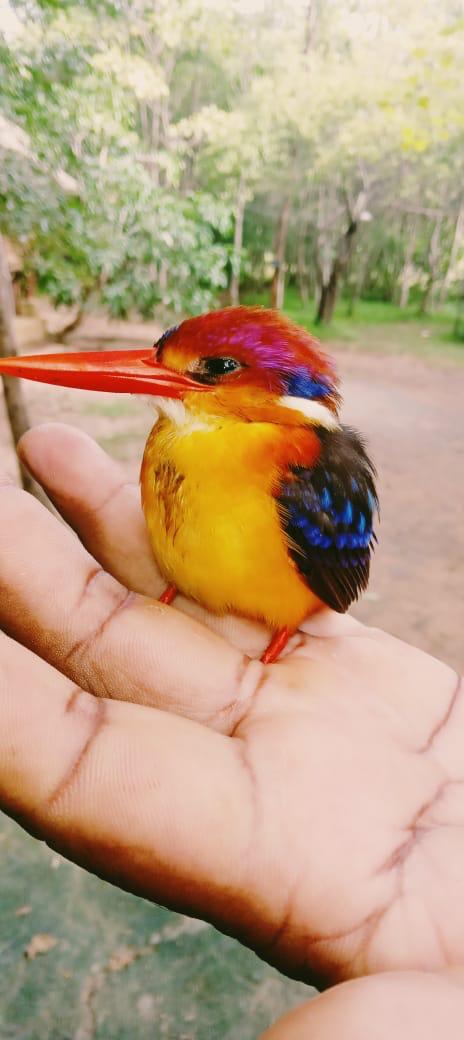
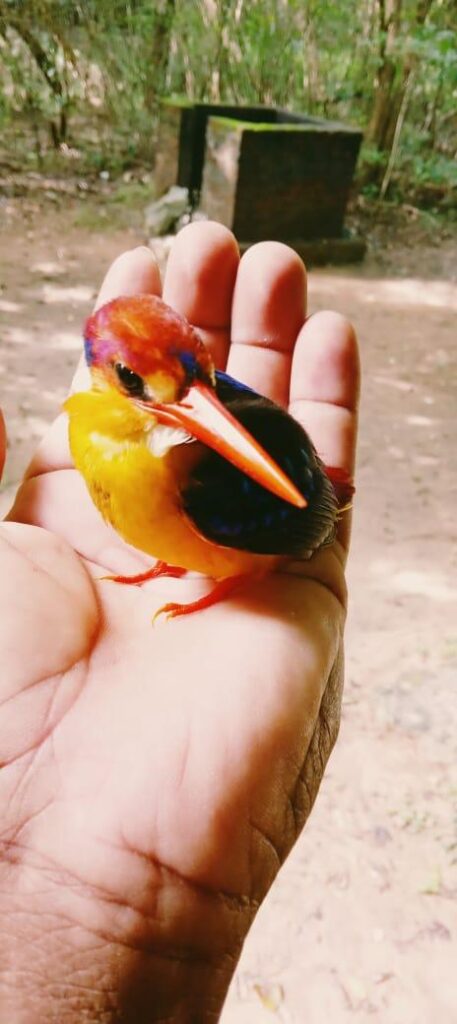
A Feathered Visitor

Our day was brightened by this little Three Toed Kingfisher (Ceyx erithaca, now called the Oriental Dwarf Kingfisher) who flew into The Villa at Far Cry. Our feathered friend seemed content to nestle in our Villa Manager’s hand for a while, and eventually flew away.


Wall-less and open to nature, this is exactly the kind of rare interaction with wildlife that is possible at this magical destination.


With the onset of the rains and cooler weather, Nature has come alive around Far Cry. Stay with us and share the joy!


To book The Villa or The Gatehouse, call +94 777301908 or visit www.farcryhabarana.com/reservation/

A Nightime Visitor To The Village

This video is a CCTV capture from last night in Galkadawala village, when a small group of three elephants broke through the electric fence, and walked along the main road, feeding in village home gardens and finally breaking into a paddy store in one of the village houses.

Our village has seen a marked increase in elephant activity in the last few months. A small herd of fifteen to twenty animals have been regularly spotted crossing the road between the village and Palugaswewa, most recently a few days ago.  The electric fences installed around the village a few years ago have proved to be ineffective,  and are regularly breached. A friend who is an authority on elephant behaviour explained that elephants become habituated to permanent fences and find ways of disabling them. At Far Cry we have had first had experience of this recently.

What triggers these localised movements? My friend explained that small groups from the large gathering at Minneriya and Kaudulla National Parks disperse into the surrounding villages when water levels in the two tanks increase, either due to the release of water for cultivation, or due to heavy rains. With the onset of the monsoon, and the ongoing “Maha” cultivation in progress, we can expect to see more elephant  activity in and around our village.

Understanding the behaviour of these gentle giants, and learning to co-exist with them is the only solution to the so called Human Elephant Conflict. Follow this link to learn more about what is being done – https://ejustice.lk/proposal-to-mitigate-thehuman-elephant-conflictin-sri-lanka/

The Positive Energy of Flowing Water

Vaasthu and Feng Shui are ancient systems of spatial design that promote harmony, balance and well being in life. Originating in South Asia and China respectively, the two systems have many common elements, demonstrating the universality of certain design principles. One such principle is the importance of flowing water around places of abode – purportedly to regenerate positive energy.. Sri Lanka’s rural landscape is blessed with an abundance of flowing water, harnessed by our ancient kings for agriculture. It is no coincidence therefore that one feels so much at ease when spending a few days, or, if you are lucky, a week or more, in Sri Lanka’s beautiful countryside, be it in the hills or in the dry zone, within sight of a lake or a river. Far Cry is particularly favoured by irrigation channels that run around two sides of its boundary, as well as older streams that flow through it. Except in the driest of seasons, these channels carry water from our local “wewa” or tank to the rice fields below. I am convinced that the serenity of Far Cry is largely due to the water factor – so many of our guests have described it as “magical”. Why not come, experience it yourself?